
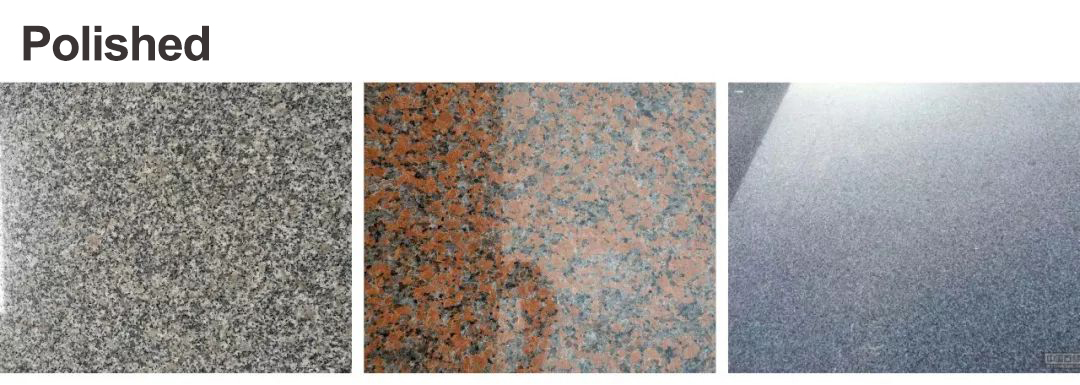
Polished finish refers to a flat surface that is polished with resin abrasives to achieve a mirror-like gloss. Most stones can reach 80-90 degrees of gloss, and some even exceed 100 degrees, though certain stones cannot be polished and can only achieve a honed finish. Generally, higher gloss means higher cost. Polished finish is widely used in flat curtain walls, interior walls, and flooring, especially in high-end buildings where high gloss is required for interior walls and floors. It features high gloss and strong light reflection, fully displaying the rich, vivid colors and natural texture of the stone. However, polished finish has poor slip resistance in wet conditions, making it unsuitable for shower floors or outdoor walkways. Daily maintenance requires neutral cleaners to avoid acid corrosion on the surface.
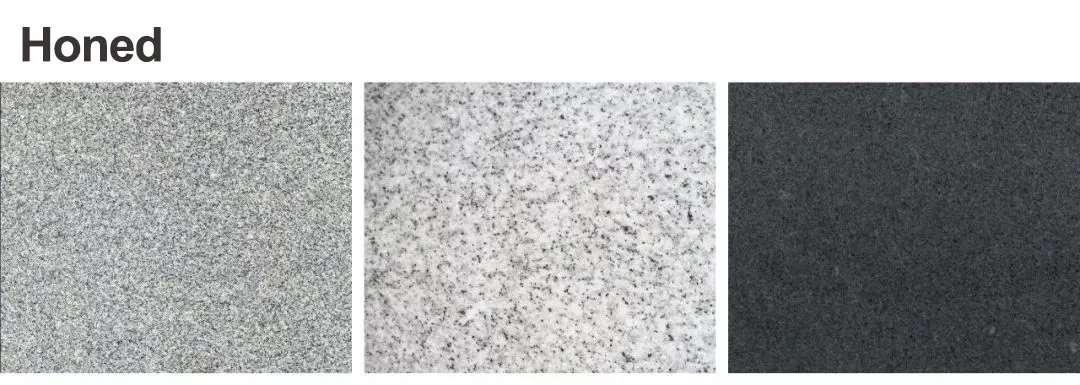
Honed finish refers to a flat surface that receives less polishing with resin abrasives. Its gloss is lower than polished finish, typically around 30-50 or 60. It has some gloss but weak light reflection. The surface is smooth and flat with low gloss. Honed finish effectively hides fine scratches and daily wear, making it suitable for high-traffic areas like shopping mall floors and hotel lobbies. Its diffuse reflection reduces light pollution and creates a soft, comfortable visual effect.
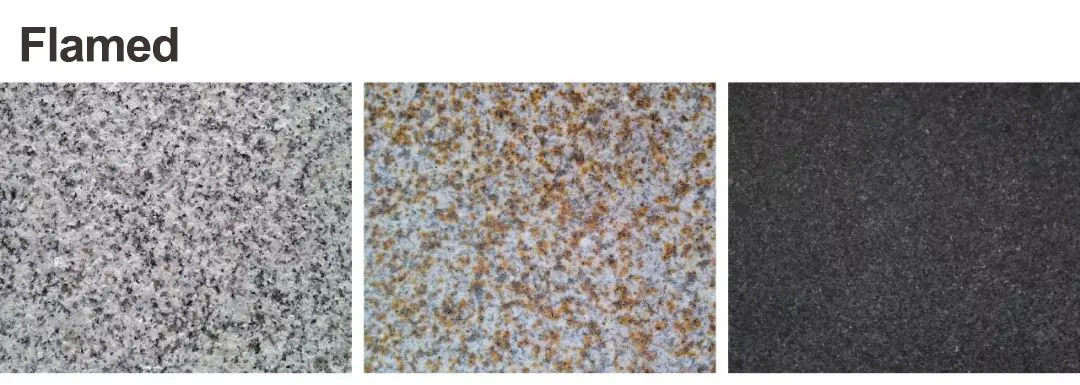
Flamed finish is a rough texture created by applying a high-temperature flame (using acetylene and oxygen, propane and oxygen, or liquefied petroleum gas and oxygen) to the stone surface. A few types of stone cannot be flamed or produce poor results. The flame burns off impurities and low-melting-point components, leaving a rough surface that feels prickly to the touch. A minimum thickness of 2 cm is generally required to prevent cracking during processing, and some stones require greater thickness. Certain stones change color during flaming – for example, G682 rust stone turns a pale red instead of its original yellow-rust color. Flamed finish is naturally rough, non-reflective, fast to produce, relatively inexpensive, and often used for exterior dry cladding. Due to its open pores, it easily traps dust and pollutants; regular high-pressure water cleaning is recommended for outdoor use. Also, flame treatment is not suitable for high-calcium marble as it may cause surface powdering and spalling.
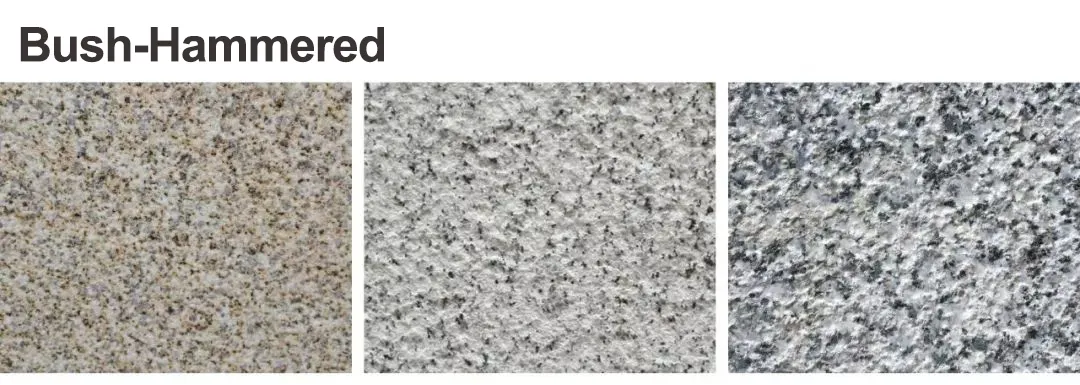
Bush-hammered finish is created by striking the stone surface with a hammer that has a textured face resembling lychee skin, resulting in a rough surface similar to lychee peel. It is often seen on carved products or plaza stones. There are two types: machine-hammered and hand-hammered. Generally, hand-hammered is denser but more labor-intensive and time-consuming. Bush-hammered finish provides excellent slip resistance due to its uniform pitted texture, commonly used on plazas, stair treads, and landscape features. Machine-hammered is efficient with regular patterns, while hand-hammered offers a more natural texture at higher cost.
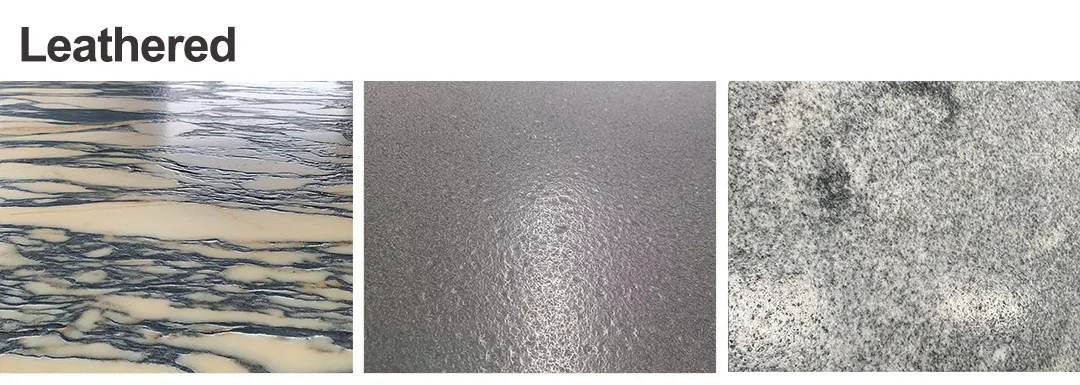
Leathered finish is produced by brushing the stone to create a soft, orange-peel texture similar to leather, with a warm tactile feel. It has a subtle dimpled texture yet feels smooth to the touch, resisting fingerprints and water spots. It is popular for kitchen countertops, bathroom vanities, and high-end tabletops. Compared to polished finish, it shows less dirt and is easier to maintain.
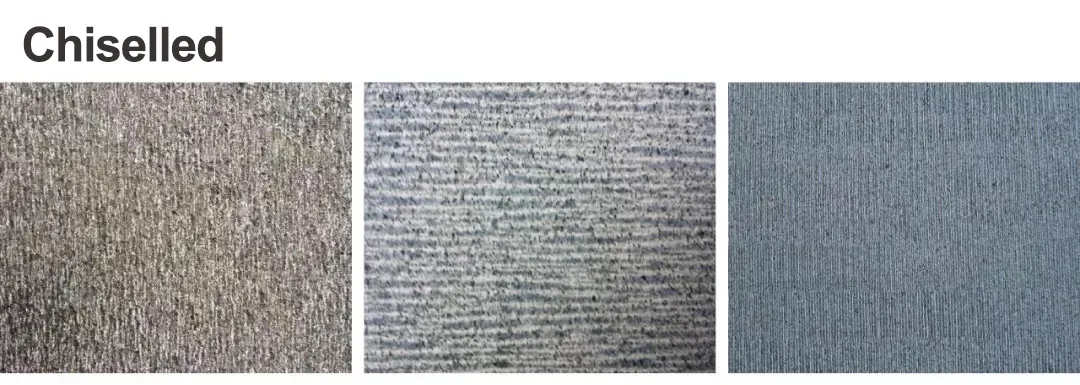
Axed / chiselled finish uses a linear hammer to strike the stone surface in a crisscross pattern, creating a rough texture similar to dragon eye skin. It is one of the most common finishes for granite carvings and, like bush-hammered finish, comes in machine and hand versions. Axed finish features strong three-dimensional texture and hand-chiseled marks, ideal for cultural stone, retaining walls, and Chinese garden landscapes. Due to slow processing and high material loss, it is typically more expensive than standard rough finishes.
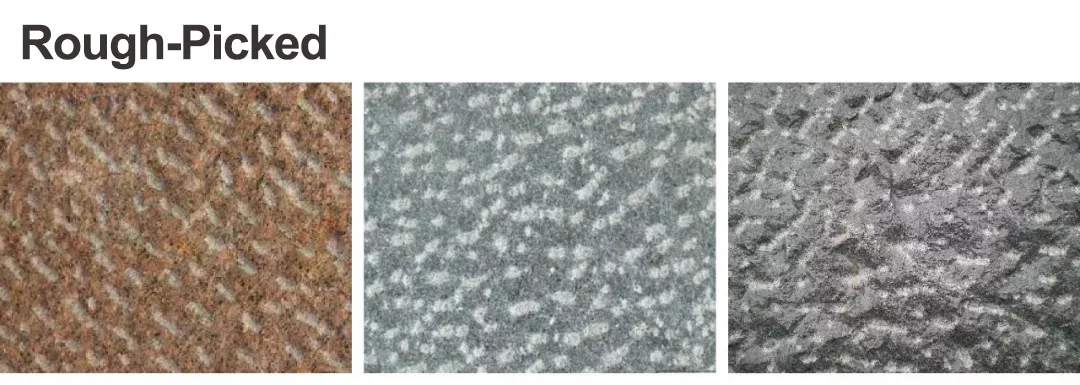
Rough-picked finish is made by chiseling and hammering the stone surface to resemble pineapple skin. It is rougher than bush-hammered and axed finishes. It can be further divided into coarse and fine rough-picked. The deep indentations provide outstanding slip resistance, making it suitable for heavy-traffic vehicle areas, dock paving, and large outdoor sculpture bases. Fine rough-picked can be applied to wall cladding for a rustic, rugged look.
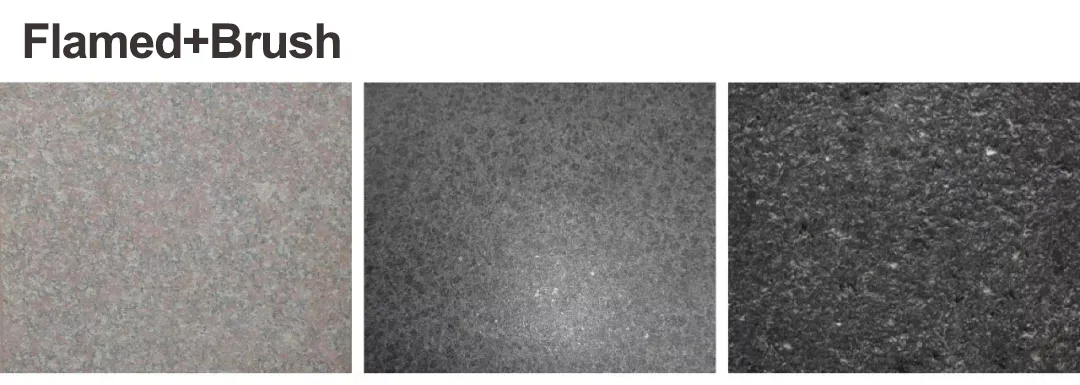
Antique finish is created by flaming the stone first and then brushing it with steel brushes 3-6 times to remove the prickly feel. It combines the凹凸 texture of flamed finish with a smooth, non-prickly touch – an excellent surface treatment. Other methods include flaming followed by water-jetting, acid etching, direct steel brushing, or high-pressure water-jetting. Antique finish is time-consuming and relatively expensive. It creates a naturally aged look that is favored by designers of vintage styles. It combines slip resistance with easy cleaning, suitable for outdoor paving, antique architecture, and homestay floors.
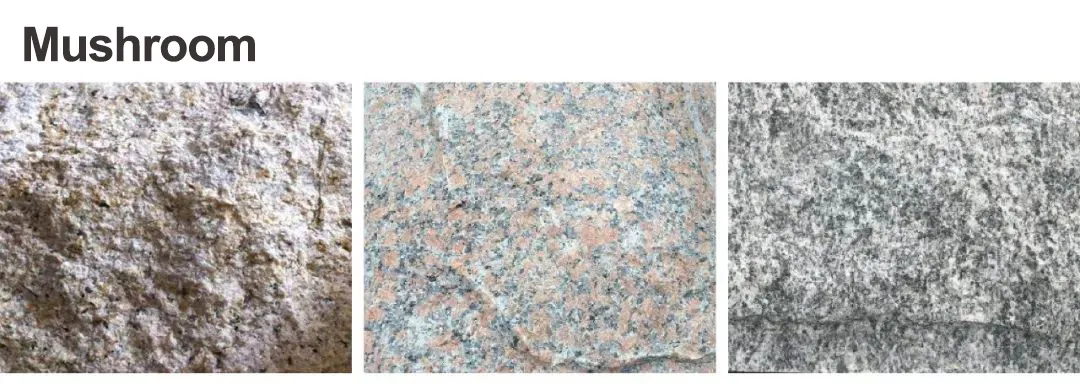
Mushroom finish is produced by chiseling and hammering the stone surface into an undulating mountain-like shape. A minimum bottom thickness of 3 cm is required, with raised portions of 2 cm or more as needed. Mushroom stone is widely used on economical fences. The raised relief creates rich shadow effects, enhancing wall layering. Besides fences, it is also used for villa exterior cladding, fireplace surrounds, and garden feature walls; proper drainage at the base is required during installation.
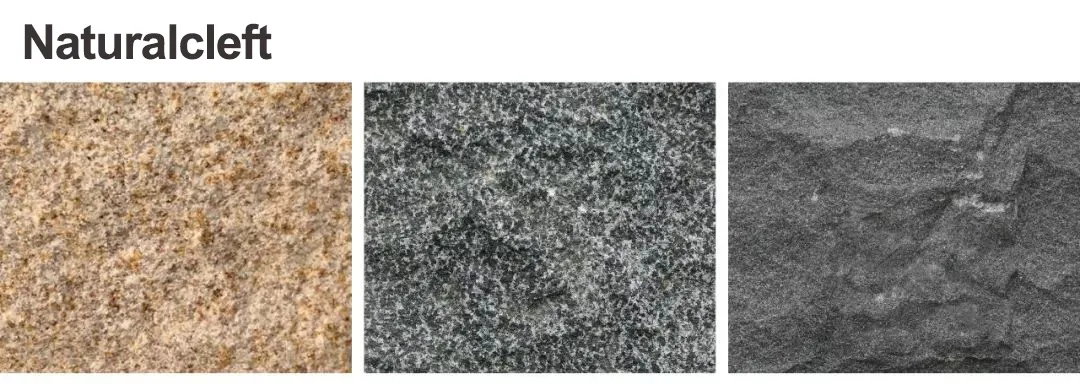
Commonly called natural cleft, this finish is rough but not as rough as flamed. It is usually achieved by manual splitting or quarry chiseling to reveal the stone’s natural fracture plane. The stone is split apart with a hammer to create an extremely uneven surface resembling natural rock. It is very rugged and widely used on small cubes, curbstones, and similar products. Split-faced finish fully preserves the natural fracture texture of rock, with each piece being unique. Its very low water absorption and high freeze-thaw resistance make it ideal for outdoor paving in cold regions, though caution is needed for walking on uneven edges.
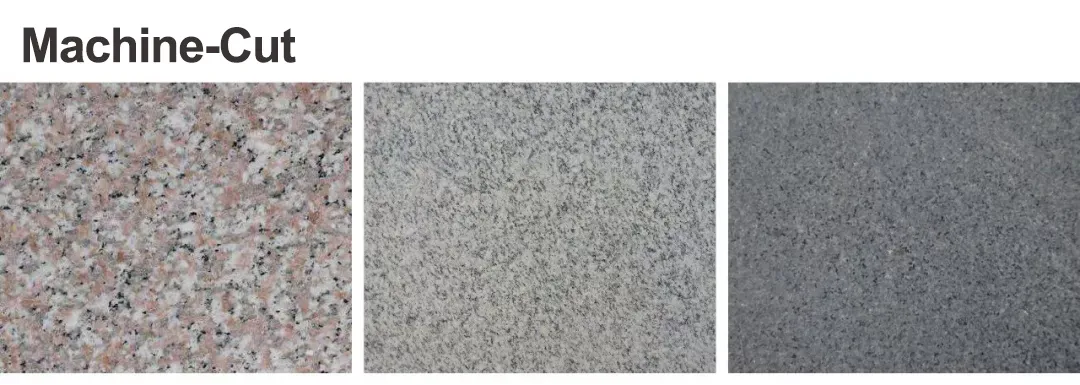
Machine-cut finish is directly cut by circular saws, sand saws, or bridge cutters, leaving a relatively rough surface with clear saw marks. It is the most economical surface condition, often used as semi-finished product for further processing. Some contemporary architecture uses it directly as a decorative finish to create industrial aesthetics and raw saw marks, requiring no additional treatment.
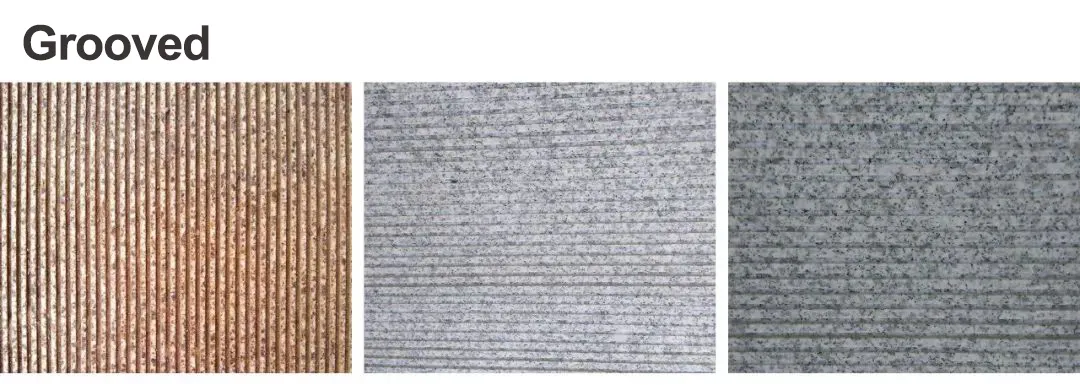
Grooved / fluted finish involves cutting grooves of specific depth and width into the stone surface. The grooves can be designed vertically, horizontally, or in a crosshatch pattern, adjusting shadow effects by varying groove spacing and depth. Commonly used for feature walls, column cladding, and anti-slip stair nosings; grooves may accumulate dust and require regular vacuum cleaning.
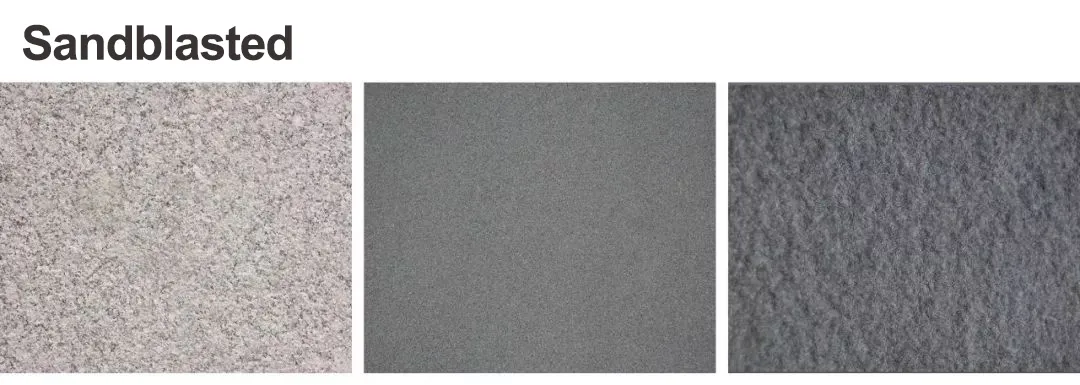
Sandblasted finish uses ordinary river sand or silicon carbide instead of high-pressure water to abrade the stone surface, creating a flat, matte decorative finish. It allows uniform control of roughness, often used for lettering, pattern carving, and old stone restoration. The process involves no high heat, making it suitable for heat-sensitive marble varieties, with moderate cost.
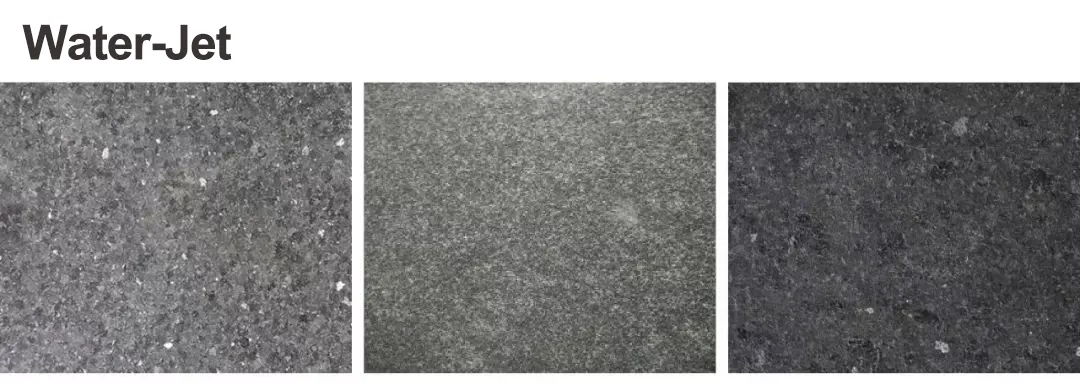
Water-jet finish uses high-pressure water to directly impact the stone surface, stripping away softer components to create a unique matte decorative effect. It selectively removes softer mineral components, enhancing the natural layering of stone texture. Compared to sandblasting, it is more environmentally friendly (no dust) and avoids embedded grit contamination, suitable for indoor and outdoor anti-slip tiles.
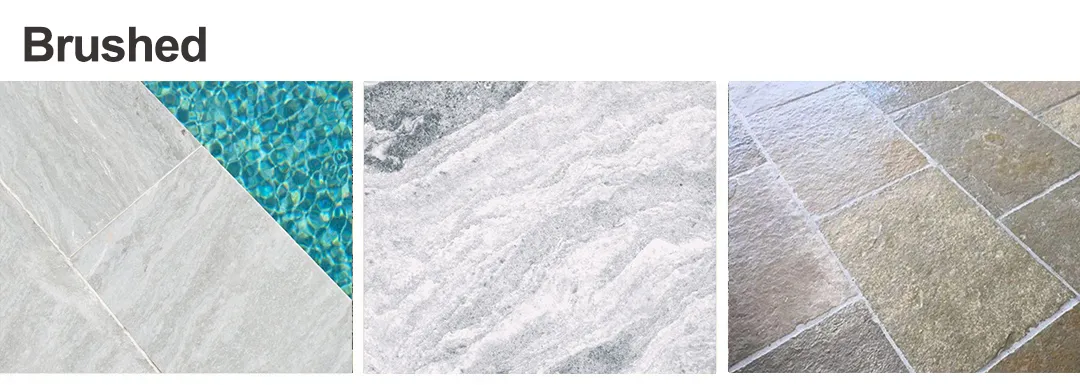
Brushed finish gives an aged appearance. The process involves brushing the stone surface to mimic natural wear. Wire or nylon brushes are used repeatedly in one direction to create a smooth, aged look similar to river erosion or wind wear. Commonly used for distressed stone bricks, fireplace surrounds, vintage flooring and the paving stones around the pool.
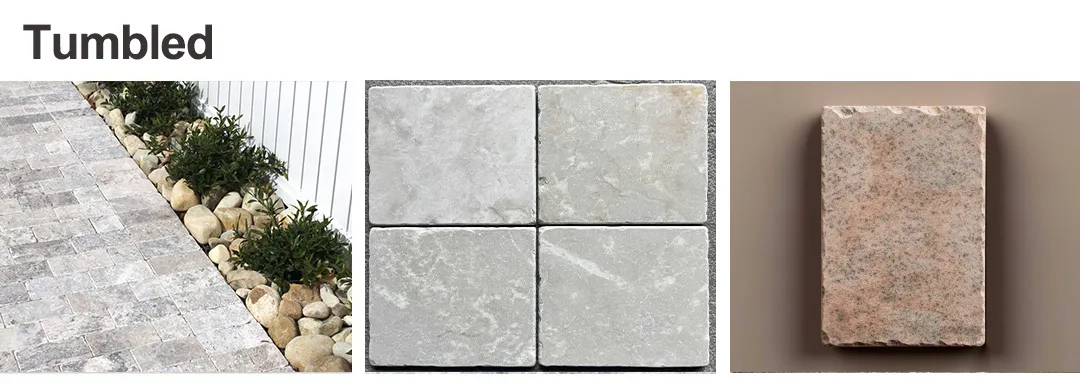
Tumbled finish produces a surface that is smooth or slightly rough, with smooth, broken edges. Several methods can achieve this effect. 20mm tiles can be tumbled in a machine, and 30mm tiles can also be tumbled and then split into two. Marble and limestone are preferred materials for tumbling. Tumbling rounds the edges and lightly etches the surface, simulating centuries of natural wear. It is especially suitable for limestone and marble mosaics and paving tiles, allowing natural-looking joints without perfect alignment after installation.
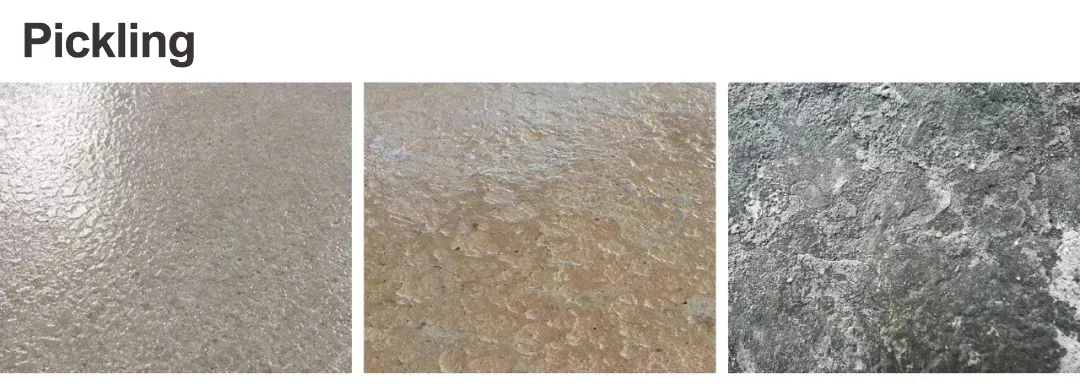
Pickling uses strong acid (such as hydrochloric acid) to etch the stone surface, leaving small corrosion marks and a more rustic appearance than polished finish. Most stones can be pickled, but marble and limestone are most common. Pickling is also a way to soften the gloss of granite. In curtain walls and interior decoration, polished, flamed, and bush-hammered finishes are most common; the choice of surface treatment depends on the designer’s intent to achieve a certain visual effect or function. Pickling uniformly etches carbonate minerals, creating a fine matte texture with improved slip resistance over honed finish. Note that acid washing reduces stain resistance; subsequent application of penetrating sealer is recommended.
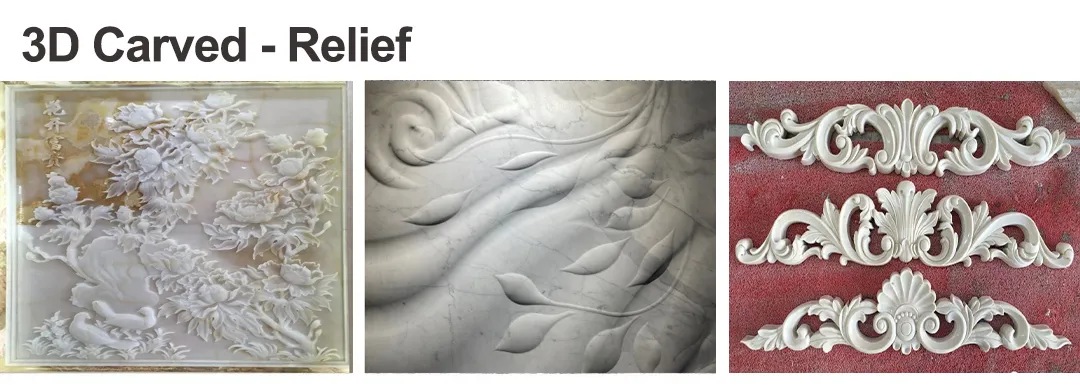
3D carved / relief finish uses CNC machines to precisely carve three-dimensional patterns, geometric lines, or artistic reliefs. 3D carving可以实现 complex hollowing, portraits, floral patterns, and modern geometric shapes, representing the highest form of decorative stone art. Slow processing, high tool wear, and expensive cost limit its use to high-end feature walls, niches, monuments, and custom art pieces.